





Shenzhen International Low-Carbon City is a showcase for near-zero-carbon buildings and green technologies. It is also the venue for the National Low-Carbon City Forum (Shenzhen), which has been held for many years.Two landmark buildings in the area — the Low-Carbon City Convention and Exhibition Center and the Future Complex — bring together a range of technologies designed to reduce energy use and carbon emissions.

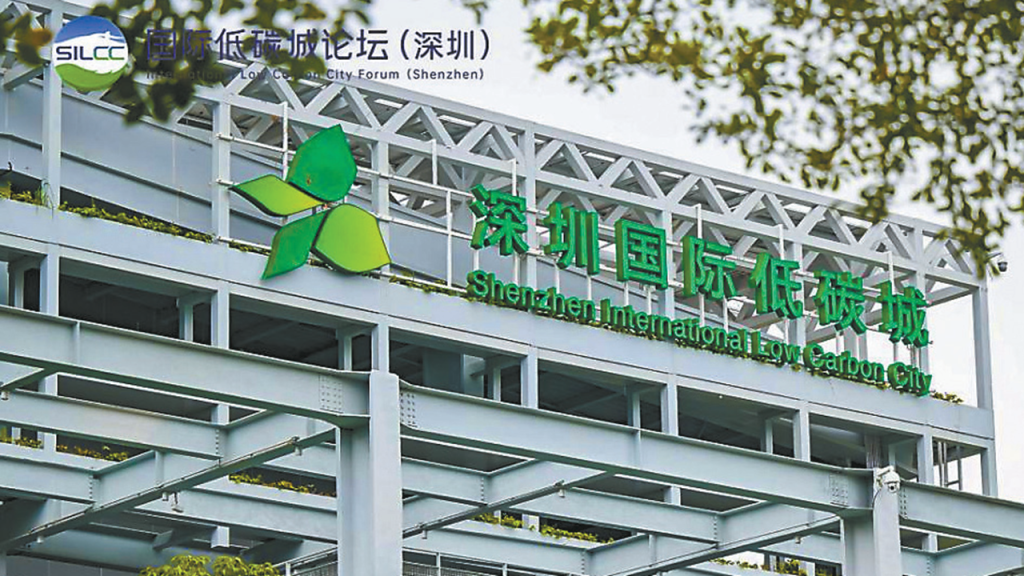
The Convention and Exhibition Center consists of four halls, A, B, C and D, with a total floor area of about 33,000 square meters. More than 115 low-carbon technologies have been adopted across the complex. Halls A and B have received the design certification for zero-energy buildings, while Hall C has received the design certification for a near-zero-energy building.An energy management platform monitors electricity, water, gas, solar power and energy storage in real time at the center. Even furniture and landscape facilities make use of recycled steel, aluminum and stone left over from construction and demolition, bringing the idea of a circular economy into everyday use.Nearby, the Future Complex is another major near-zero-energy office project. Its R3 building, with a total floor area of 63,000 square meters, is a large-scale demonstration project for PEDF, or Photovoltaics, Energy Storage, Direct Current and Flexible interaction. It uses modular steel construction, which helps reduce material waste and carbon emissions during construction.The building combines external shading, adjustable windows and extensive vertical greenery to reduce solar heat gain and improve natural ventilation. A three-level energy storage system — centralized building storage, distributed floor-level storage and dedicated air-conditioning storage — works with solar power and direct-current distribution.This system allows many DC-powered devices inside the building to use solar-generated electricity directly.
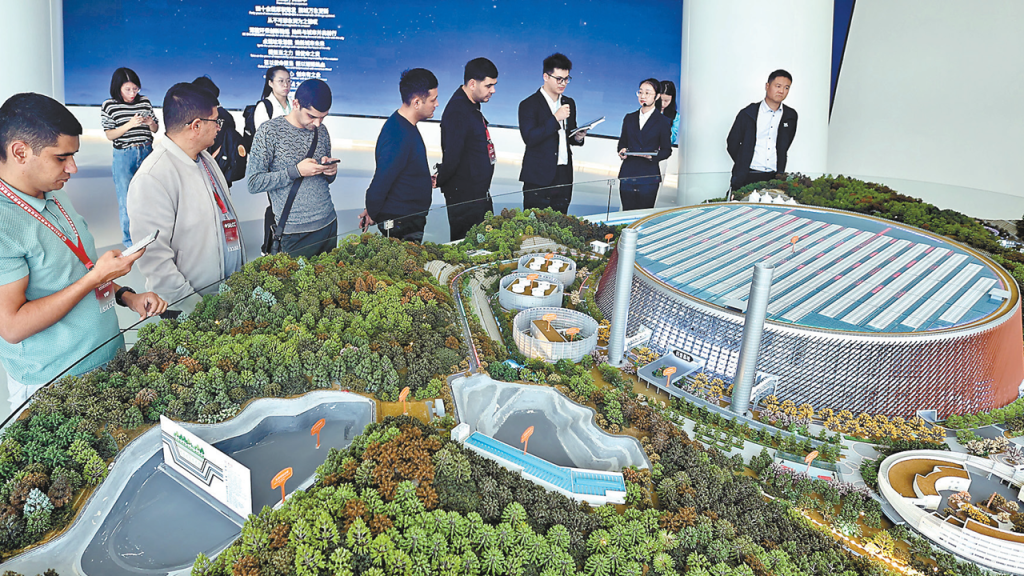
Beyond individual buildings, the National Low-Carbon City Forum (Shenzhen) has established a program to select and recognize green and low-carbon demonstration bases. The program covers buildings, industrial parks, transportation, recycling and distributed energy. Rather than simply displaying technologies, it identifies projects that are already operating and turns them into examples that can be replicated elsewhere.One example is the Lianhuashan Supercharging Station, which combines solar power, energy storage and ultra-fast charging with vehicle-to-grid (V2G) technology. Electric vehicles can serve not only as users of electricity but also as mobile energy storage units that can help balance the power grid.In the industrial sector, the Jingneng Industrial Park has installed large-scale rooftop solar panels, megawatt-level energy storage, solar-powered carports and a smart carbon management platform. The project helps transform a traditional energy-intensive industrial park into an integrated system connecting energy supply, the grid, energy demand and storage.In recycling, the Beauty Star Plastic Recycling Industrial Base turns waste plastics into new materials through sorting, processing and remanufacturing. In the energy sector, a solid oxide fuel cell project at the eastern campus of Guangming District People’s Hospital uses natural gas-based distributed combined heat and power generation. Its power generation efficiency can reach 65%, while its combined efficiency for electricity, heating and cooling exceeds 85%, providing a stable low-carbon energy solution for a hospital that operates around the clock.The forum also recognizes companies for their ESG practices. These include efforts to reduce carbon emissions across the life cycle of battery materials, manage carbon emissions throughout the life cycle of buildings, and establish systems for calculating product carbon footprints.Using Shenzhen as a window, the forum brings together U.N. officials, government representatives, experts, scholars and business leaders from around the world. Discussions focus on urban low-carbon transformation, China’s carbon goals and green innovation. The forum also features specialized sessions, technology demonstrations and project matchmaking, helping connect ideas with practical cooperation.Over the years, the forum has attracted more than 10,000 participants from over 70 countries and regions. By sharing green development ideas, showcasing China’s progress toward carbon peaking and carbon neutrality, and promoting international cooperation, the forum has become an important platform for green and low-carbon ideas, technologies and business opportunities.